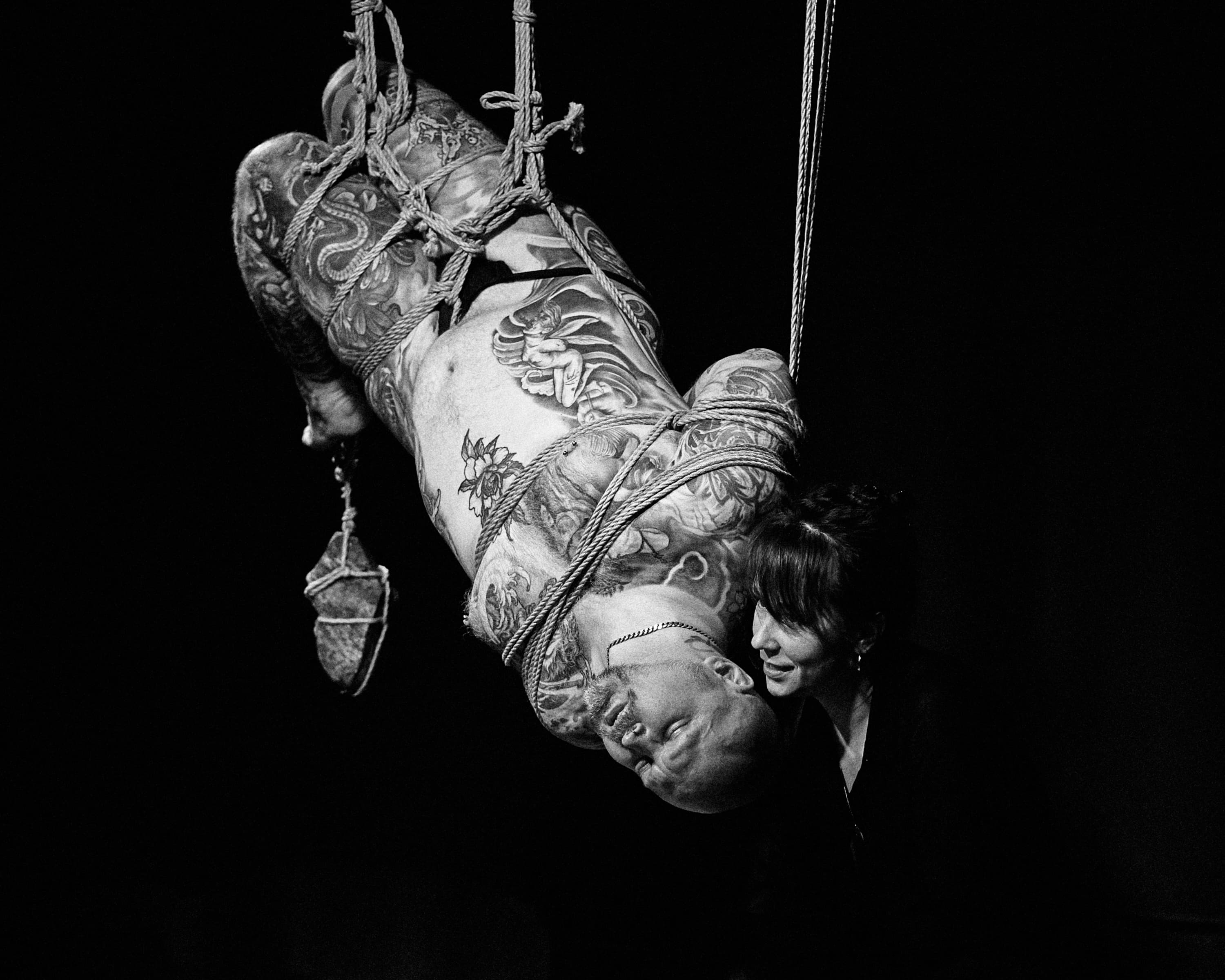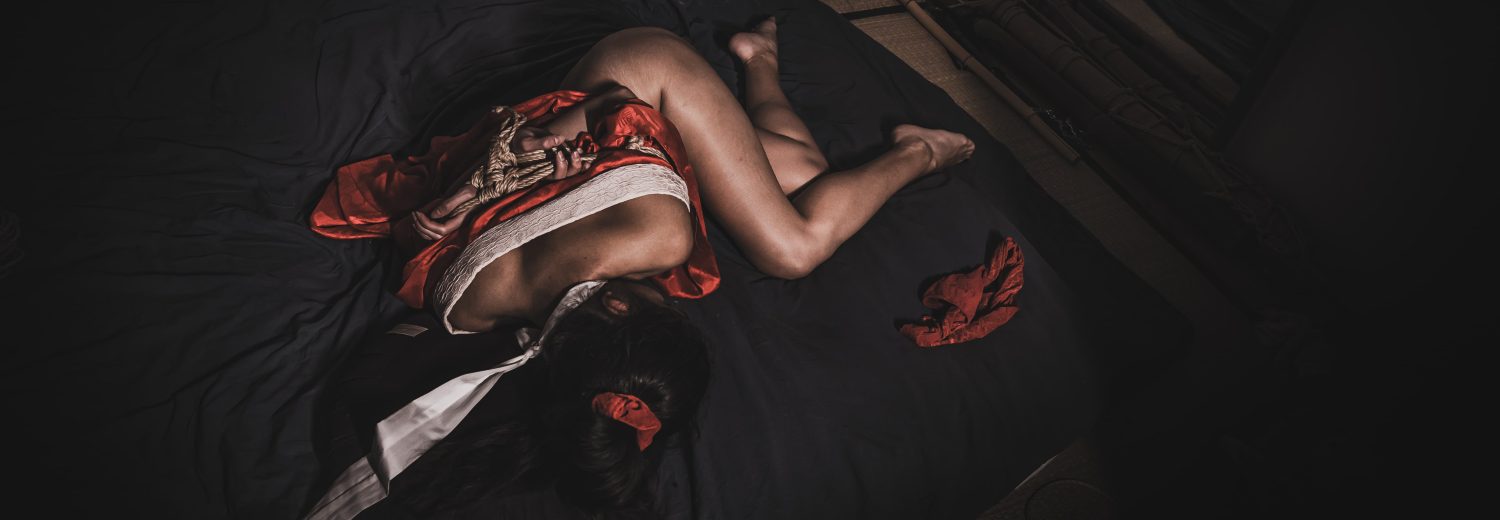
I had the profound privilege of stepping into a new role in my shibari and kinbaku journey: that of a rope model in a public performance. In a vibrant, electric atmosphere at a local event, I was tied by my talented student sapio_shibari (ig) in front of a audience. The experience was exhilarating, deeply liberating, and offered me a fresh perspective that I’ll carry forward in my practice as a rigger.
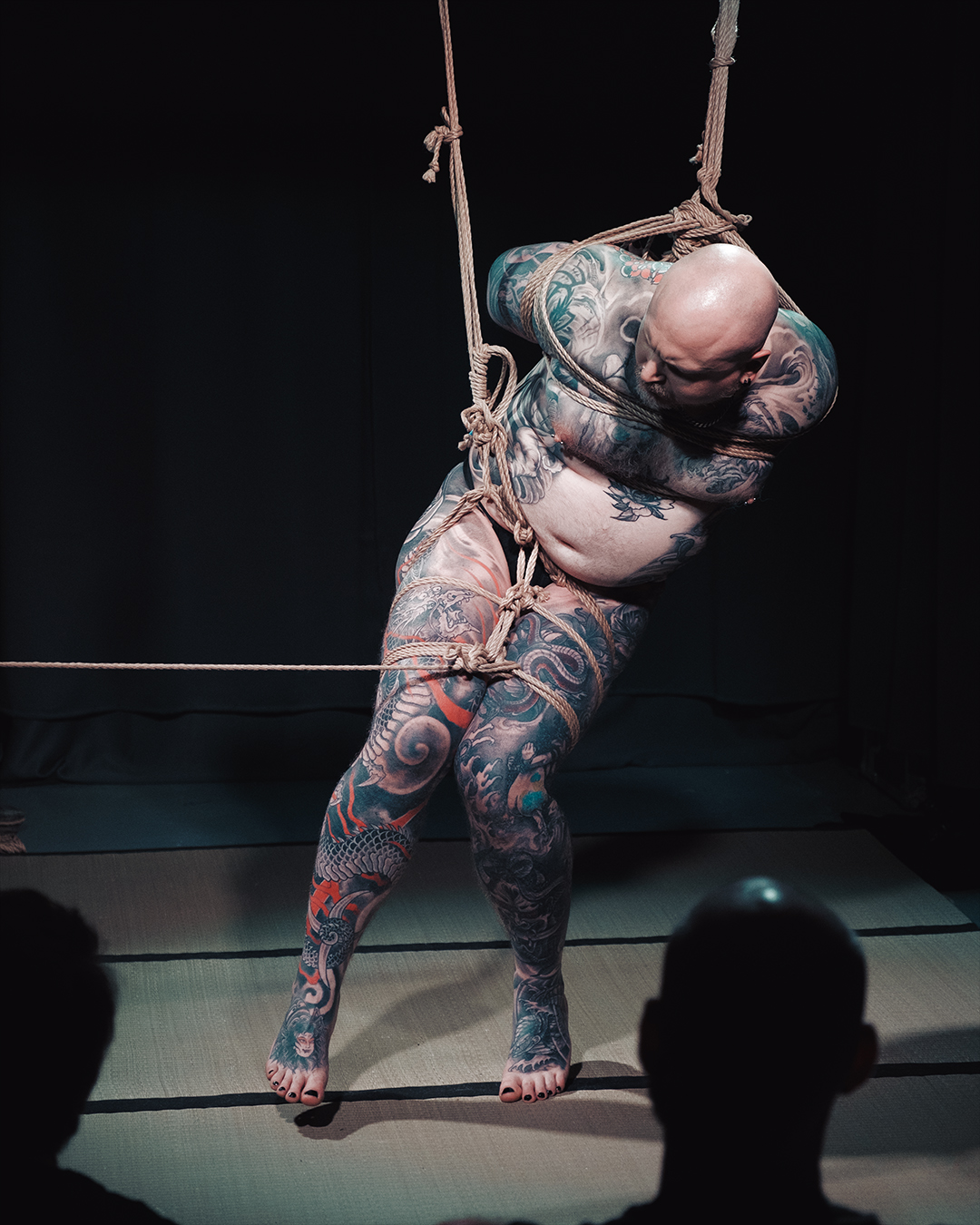
As someone who spends most of their time as a rigger, meticulously crafting knots and patterns to create moments of connection and beauty, being on the receiving end of the ropes was a rare and humbling shift. My student, who has been diligently honing her skills, was my rigger for the evening. We had practiced together beforehand, ensuring our dynamics and intentions were aligned. This preparation together with our mutual history built a foundation of trust that allowed me to fully surrender to the moment.
From the first touch of rope against my skin, I felt an overwhelming sense of safety in her hands. Her focus, care, and confidence were palpable, and I could sense the audience’s energy reflecting the same excitement I felt. It was a testament to her growth as a rigger and to the bond we’ve built through our shared passion for this art.
Liberation in Surrender
Being tied up in front of an audience was unlike anything I’ve experienced before. There’s a unique vulnerability in being a rope model, a surrender that feels both exposing and empowering. As the ropes tightened and my body moved into the shapes we’d planned, I found myself letting go of control in a way that felt profoundly freeing. The crowd, the lights, the rhythm of the ropes—it all blended into a meditative flow where I could simply be.
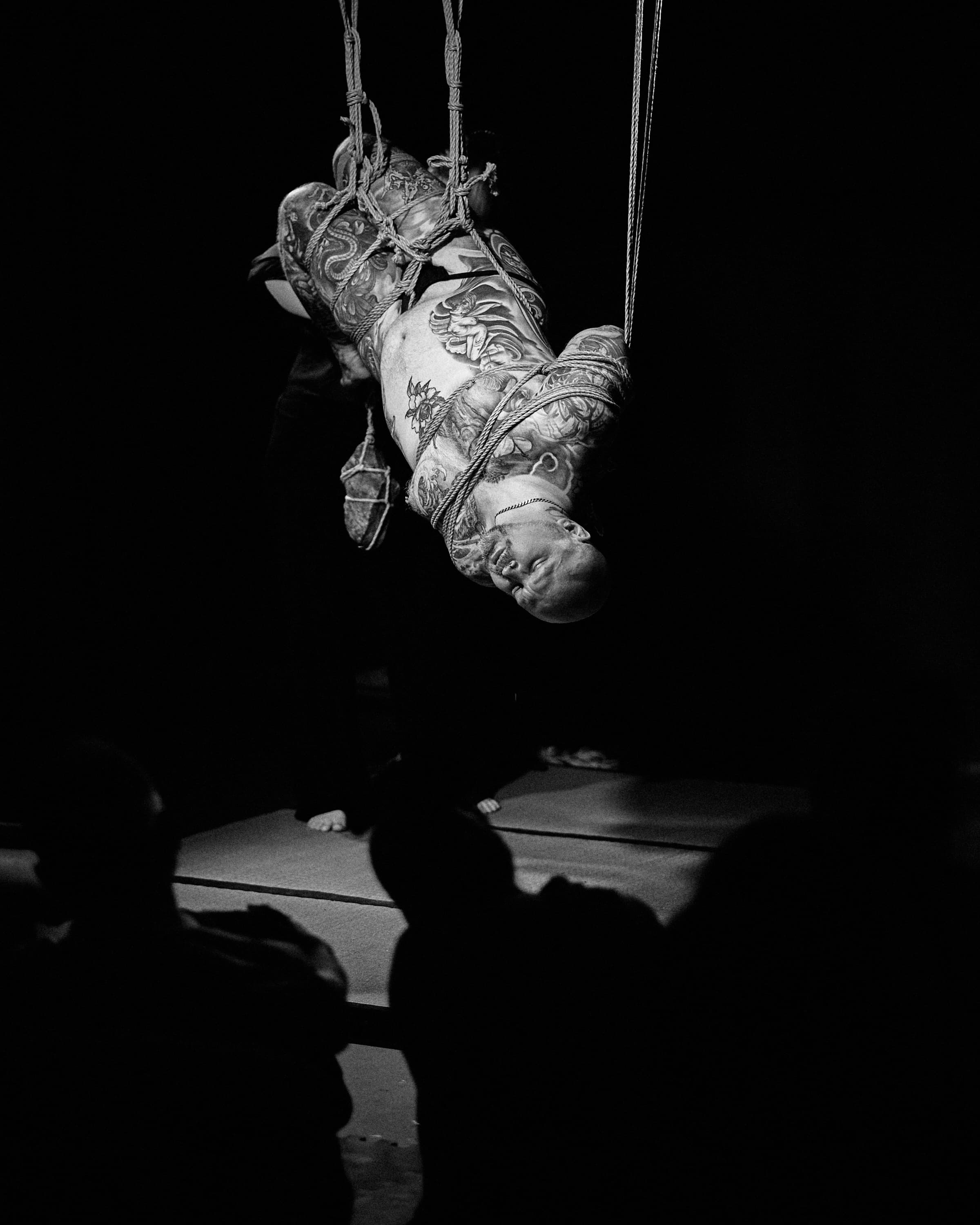
This experience allowed me to explore sides of myself I don’t often access as a rigger. The act of receiving, of trusting someone else to guide the scene, opened up new emotional and physical layers. It was a reminder of the intimacy and dialogue inherent in rope—whether you’re tying or being tied, it’s a conversation of trust, presence, and mutual respect.
As a rigger, I spend countless hours considering the technical and emotional nuances of tying. But being a model gave me a deeper understanding of what my own models experience. Feeling the ropes’ tension, the subtle shifts in balance, and the emotional weight of being seen in such an intimate act gave me a renewed appreciation for their courage and vulnerability. This perspective is invaluable, and I know it will inform my approach as a rigger moving forward. It’s one thing to tie with care; it’s another to truly understand what it means to be on the other side of the ropes.
Gratitude
I want to take a moment to express my heartfelt gratitude to everyone who made this experience possible. To my student, whose skill and presence made this performance a beautiful reality—thank you for your dedication and for sharing this moment with me. To the whole Shibari Ropeplay team, who created a safe and welcoming space for us to share our art. To the audience, whose energy and respect amplified the magic of the evening—thank you for witnessing us. And to the broader shibari and kinbaku community, thank you for fostering a space where we can explore, grow, and connect through this incredible practice.
This experience was a gift—one of trust, vulnerability, and discovery. It reminded me why I fell in love with rope in the first place: not just for the beauty of the ties and patterns, but for the profound human connections they create. I’m excited to carry these lessons forward, both as a rigger and as someone who knows the transformative power of being tied.
Thank you!