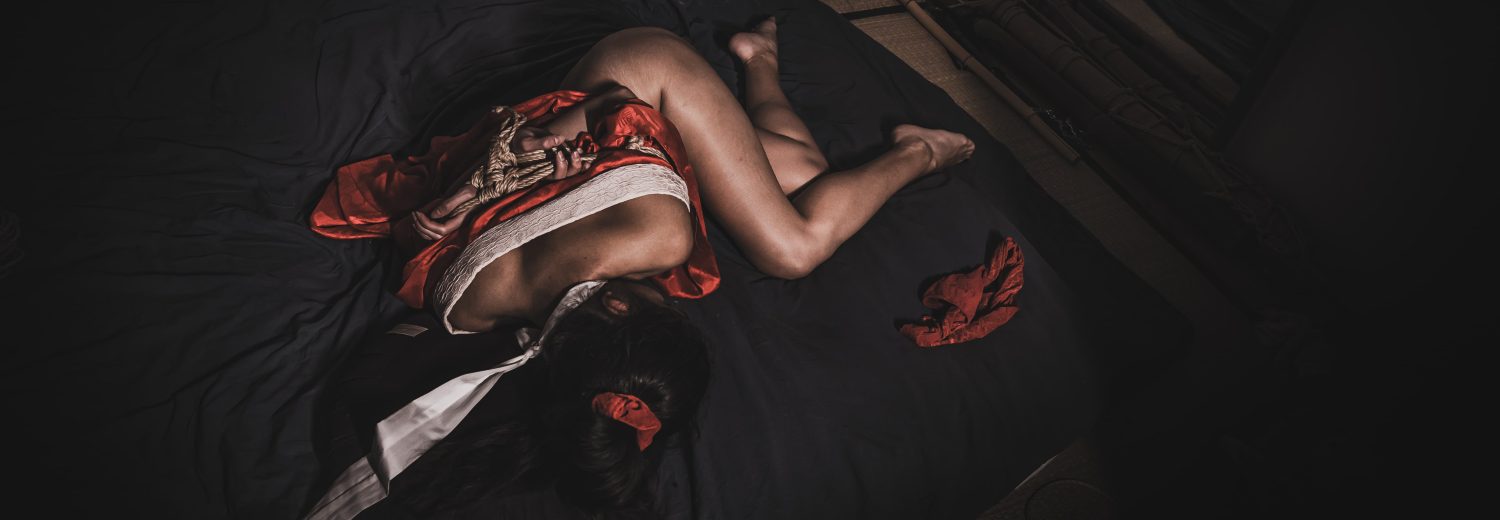
Semenawa, the art of “tormenting rope” within the broader world of shibari and kinbaku, has always held a special place in my heart. There’s something raw, intense, and deeply human about this practice that resonates with me on a profound level. I’ll admit, there’s a part of me that’s drawn to the edge—the sadistic undercurrent that Semenawa allows me to explore. It’s not about cruelty, but about creating a powerful, exchange of energy through the ropes. The aesthetics of Semenawa, with its deliberate tension and evocative forms, feel like an extension of my own creative and emotional core.
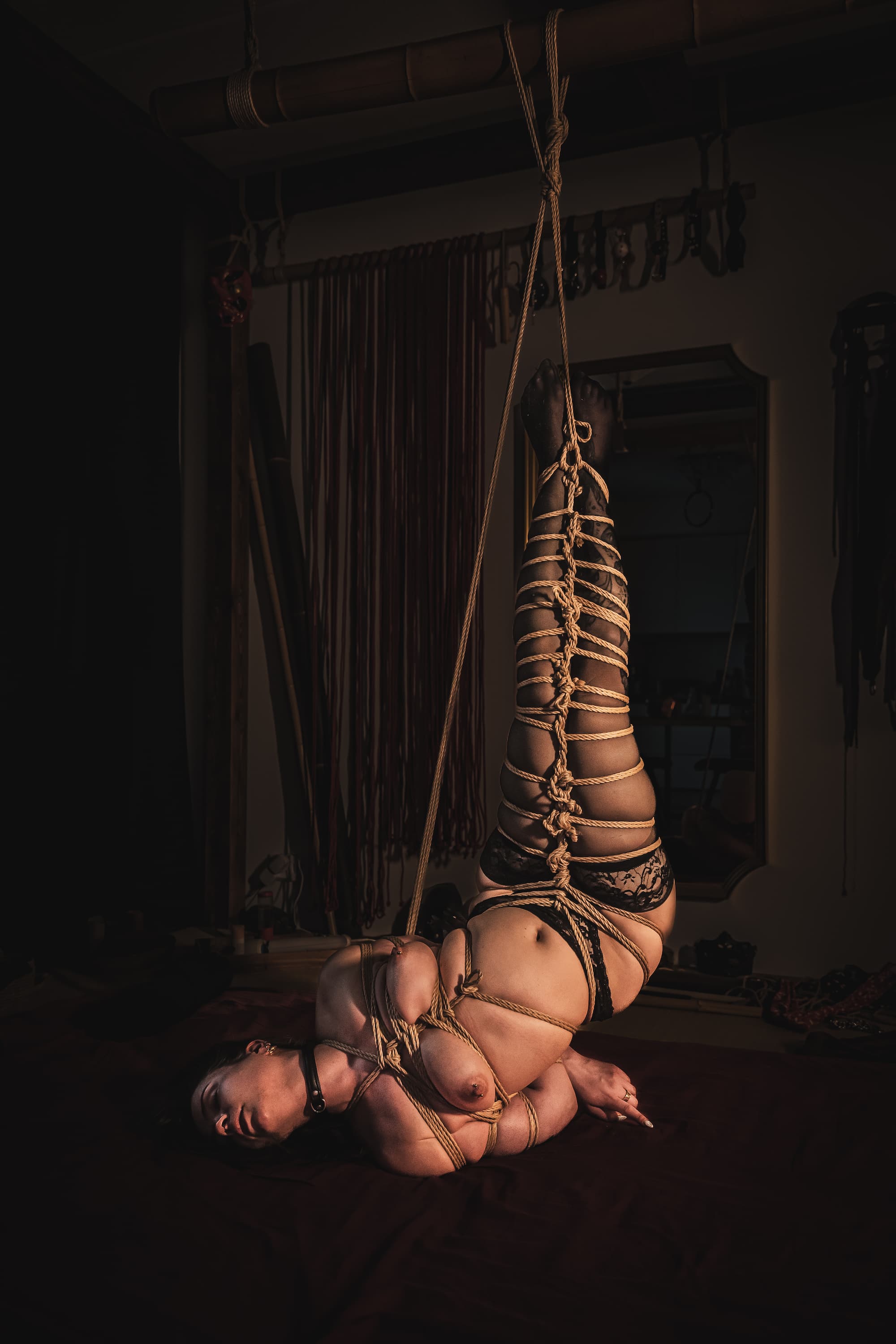
My fascination with Semenawa was sparked by the legendary Naka Akira, whose work is nothing short of genius. His approach to kinbaku and Semenawa, is a masterclass in blending intensity with artistry. Naka’s ties are a storytelling medium, conveying vulnerability, strength, and surrender in equal measure.
I’ve also been deeply inspired by Norio Sugiura, who has taken Naka’s work to new aesthetical heights alongside other remarkable riggers he has worked with. Sugiura’s dark, elegant, and quite obscene imagery has profoundly shaped my own artistic output, not only as a rigger but also as a photographer. His ability to weave raw emotion and visual poetry into his pictures has pushed me to explore deeper layers of expression in my own work. Meanwhile, I’ve been fortunate to hone my technical skills under the guidance of Naka’s deshi, Riccardo Wildties. His precision and emphasis on safety and technique have given me the tools to bring my own vision of Semenawa to life. Riccardo’s teachings have helped me navigate the complexities of this practice, ensuring that my ties are not only visually striking but also structurally sound and safe.
Still, Semenawa is not without its challenges. One of the greatest struggles I face is finding the delicate balance between meaningful connection and flow with my model and the pursuit of aesthetic perfection. The ropes are a conduit for connection—a way to build trust, vulnerability, and mutual understanding. But the pull toward creating a visually stunning tie can sometimes overshadow the emotional dialogue that lies at the heart of Kinbaku. It’s a dance that requires not just skill but wisdom and patience. There are moments of frustration when a tie doesn’t feel quite right, or when the energy between me and my model isn’t perfectly aligned. These moments remind me that tying is as much about the journey as it is about the result. It demands presence, adaptability, and a willingness to listen deeply to what the ropes—and the person in them—are communicating.
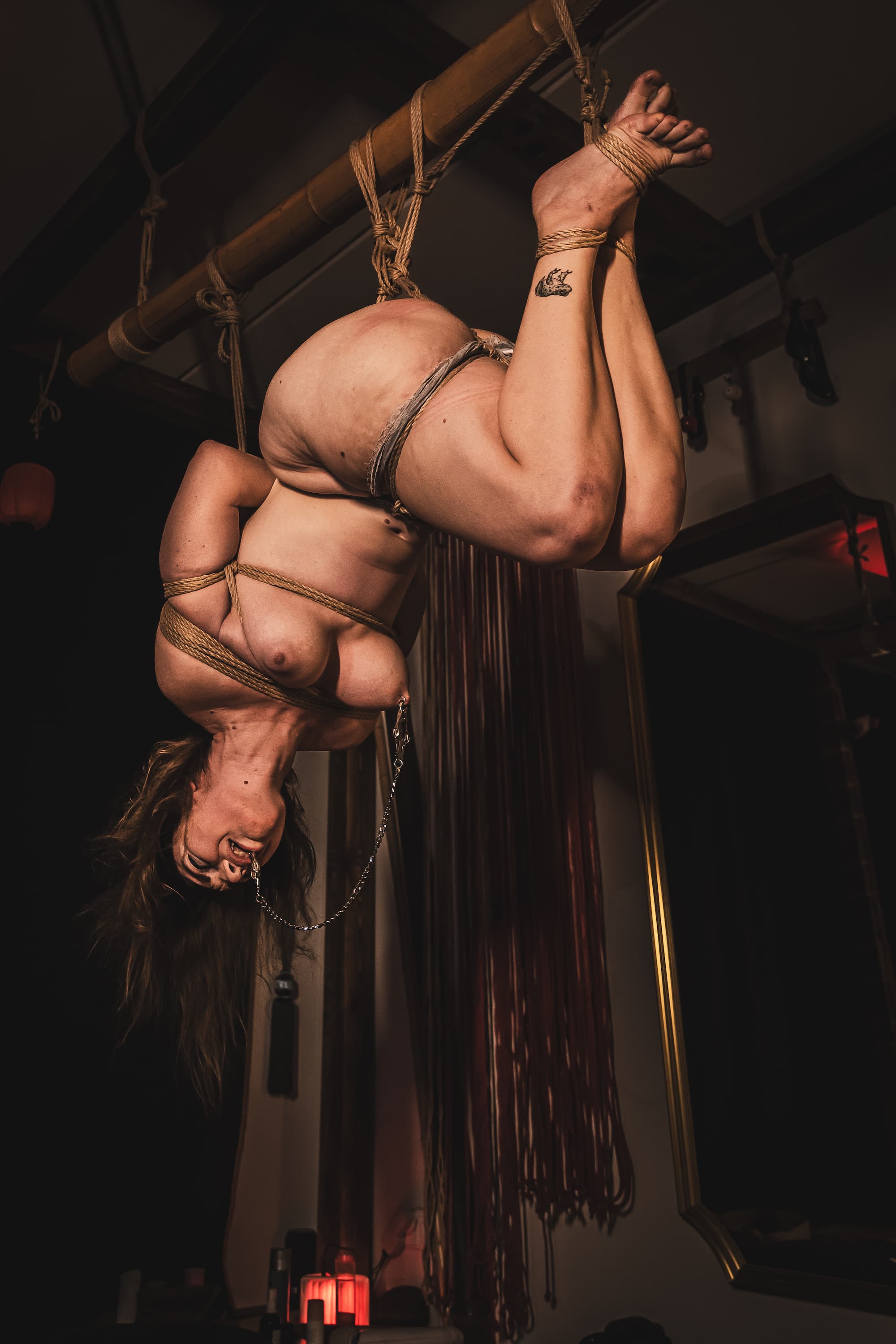
Despite these challenges, Semenawa is an approach I enjoy deeply. I’ve spent years refining my craft, tying countless patterns, and learning from every session. Each experience is a chance to grow and to deepen my connection to this art form. The intensity of Semenawa, its ability to evoke raw emotion and create a shared space of trust and surrender, is what keeps me coming back. It’s a practice that never feels static; there’s always something new to learn, a new layer of understanding to uncover.
That said, Semenawa is not something to be taken lightly. It requires a level of expertise and responsibility that cannot be overstated. The physical and emotional safety of the model is paramount, and this practice demands a deep understanding of anatomy, rope dynamics, and consent. A single misstep can have serious consequences, which is why I’m committed to constant improvement—studying, practicing, and seeking feedback to ensure that every tie is executed with care and precision.
For me, Semenawa is a way of connecting with another person on a profound level and highlighting the power dynamics it involves. It’s about crafting moments of beauty, intensity, and trust that linger long after the ropes are untied. It’s a journey I’m happy to be on, and one I’ll continue to explore with passion, respect, and an open heart and mind.
